
Perspective · AI
Build the Bunkers Before the Blast

Chimera Team

Yesterday, a company built on putting AI safety first went public at a valuation north of a trillion dollars.
In security, worst-case planning is usually an exercise on paper. Here, the gap is already open. One lab can align its own leading model, and it should. What it cannot do is align the third-best model, the tenth-best model, or an open-weight checkpoint fine-tuned overseas. If even one capable system operates without guardrails, every downstream network absorbs the fallout.
Same Hands, Sharper Weapons
The real threat was never an amateur stumbling into a chatbot. The most destructive cyberattacks in history came from disciplined, well-funded operators. NotPetya caused roughly $10 billion in global damage because a state-backed unit engineered it. BlackSuit, the group that paralyzed CDK Global in 2024, was the Royal ransomware operation running under a new banner.
Since late 2022, those same operators gained massive leverage. Writing a credible, localized lure used to take real research hours; after generative models went mainstream, malicious phishing volume jumped nearly 14x.
Reconnaissance, vulnerability chaining, and lateral movement are now following the exact same curve. Even when the leading frontier model refuses a prompt, the second or third best model available today outperforms anything attackers could touch three years ago.
No Company Is an Island
Large enterprises often treat small-business security as someone else's problem. Reports show why that assumption is breaking: breaches involving a third party doubled in a single year.
“Third party” goes far beyond factory suppliers. It means your accounting firm, your payroll provider, your IT contractor, your cleaning company's booking system, your software vendor, the agency running your ads: any business that touches yours. Most of them are small or mid-sized companies operating without a security team or a security budget.
We have seen how that plays out:
- Target was breached through its HVAC contractor.
- SolarWinds pushed a compromised update to around 18,000 customers.
- Jaguar Land Rover halted production for five weeks, dragging around 5,000 businesses in its supply chain down with it.
The exposure runs both ways. A small vendor can take down a giant, and a giant going down can wipe out thousands of smaller firms around it. An enterprise can spend billions protecting its own core and still fall through the weakest business it depends on.
Bringing Back Deterrence
Before AI, most ordinary businesses survived on quiet economics. Compromising a mid-sized firm required enough human hours, skill, and operational risk that serious groups reserved their effort for high-value targets.
Autonomous tooling collapsed that floor. When an intrusion moves at machine speed across linked networks, human in the loop triage and post-breach recovery arrive after the damage is done.
Winning defense back means restoring the economics of deterrence. Stopping attacks at scale requires breaking the attacker's ROI: forcing every probe, exploit attempt, and lateral hop to burn more compute, more tokens, and more time than the target could ever pay out.
Build the Bunkers Before the Blast
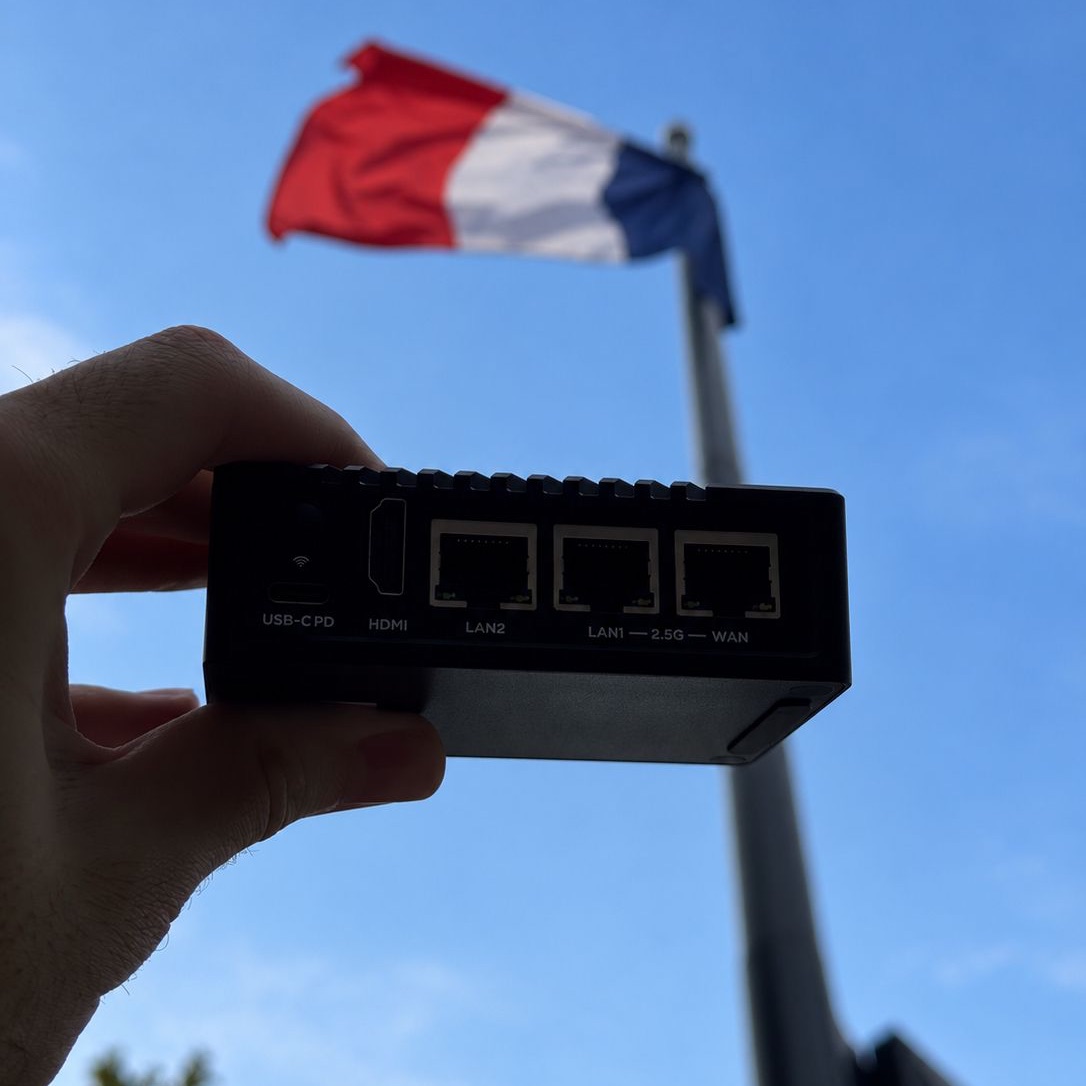
That changes what security infrastructure has to look like. Raising the defensive floor requires moving intelligence directly to the edge: local inference with full network visibility, fast enough to detect, isolate, and contain threats autonomously at machine speed, without an internal security team babysitting it. Reaching the clinic, the regional supplier, and the law firm means building autonomous defense into edge architecture from the ground up rather than shipping watered-down enterprise software.
The Bottom Line
Now the industry has to finish the job. The labs are building the first wall; someone has to fortify everything standing outside it, from the supplier in Maine to the clinic in Lyon.
That's the work we've chosen at Chimera. If you believe in this work, we want to hear from you.